Showing posts with label MA-04. Show all posts

Monday, October 6, 2008

Look familiar?


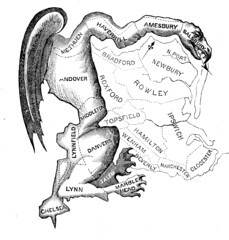
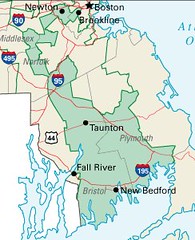
In searching Tammy Baldwin's and Barney Frank's congressional web sites for news to share here, I noticed something of minor historical interest. The graphic on the left is a map of Frank's congressional district, Massachusetts' Fourth. The graphic on the right needs no introduction to students of American history.


Bill O’Reilly goes nuts when Barney Frank corrects him


Tuesday, July 29, 2008

GOP Rep. John Kline questions need for transgender protections

Rep. John Kline (R-MN-02), the ranking minority member of the Health, Employment, Labor, and Pensions Subcommittee of the House Education and Labor Committee, had a chance to address the issue of legislating transgender employment protections during the 26 Jun 2008 hearing. His head didn't spin 360°, he didn't projectile vomit pea soup, and he didn't sound like Elaine Donnelly of the Center for Military Preparedness when she made herself sound like a loon tesifying on Don't Ask Don't Tell last week.

Kline is more incisive and surgical than that, crisply calling into question whether there is any evidence that anti-transgender discrimination even exists and whether proposals to pass an inclusive Employment Non-Discrimination Act constitute legislating for its own sake. In doing so, he has set up the Republican rationale for voting against any version of ENDA at all, let alone one that encompasses gender identity.

Committee Statement
FOR IMMEDIATE RELEASE
June 26, 2008
CONTACT: Alexa Marrero
(202) 225-4527


Kline Statement: Subcommittee Hearing on "An Examination of Discrimination Against Transgender Americans in the Workplace"

Good morning. I'd like to begin by thanking the witnesses for taking time out of their schedules to be here. I would also like to express my appreciation to Chairman Andrews for his flexibility in scheduling this hearing.

The issue we are here to examine – gender identity and workplace discrimination – follows on the Majority's efforts last fall to include protections for transgender individuals in the employment non-discrimination legislation. The purpose of this general hearing is to allow for thorough and thoughtful consideration of this issue, and any future proposals that might affect the American people.

That said, I am somewhat puzzled as to why the Committee did not hold this hearing last year, before the Majority rushed to consider legislation on this issue.

Last September, this Subcommittee held the only hearing on this topic. It was a hearing on a prior bill, the Employment Non-Discrimination Act, which broadly aimed to prohibit organizations from discriminating in their employment practices against individuals on the basis of their actual or perceived sexual orientation and gender identity. During that hearing, we heard testimony from experts who cautioned that some of the provisions in that bill could be confusing, difficult to comply with, and potentially fraught with litigation. Complex questions were raised about how that bill would impact employers; whether it would preserve religious freedom and encroach on employee privacy; and how it would comply with existing anti-discrimination statutes.

The bill's sponsors scrambled to address these questions and concerns. Ultimately, they decided to split the original ENDA bill, separating the protections based on sexual orientation and gender identity and attempting to address some of the technical concerns. But only the new bill involving sexual orientation discrimination was rushed to the House Floor for a vote. The flawed bill still raised many of the same serious concerns that were previously identified. After the bill passed the House in November 2007, it stalled in the Senate, where it still awaits action.

I can only speculate as to why no legislative action was taken on the other bill that sought protections based on gender identity. Despite the good intentions of those who supported these proposals, there still appeared to be too much uncertainty and too many unanswered questions. This explains why we are here today, examining an issue that perhaps should have been reviewed in greater detail before rushing to legislate.

We are all committed to the principle that no employee should be subject to discrimination. Before we consider and enact any new federal mandates, however, we must first determine whether a new law is necessary. Is there evidence that this type of discrimination is occurring? Are current laws and employer policies unable to protect employees? We have numerous federal and state laws and employer policies already on the books that help prevent discriminatory practices. Do we need yet another federal law? It is my view that the role of this Committee, and Congress, is to build upon this framework only when needed, and to avoid legislating for its own sake.

I look forward to hearing the testimony to be offered by our witnesses about the practical impact, benefits, and problems associated with this issue. I'm pleased that we will hear multiple perspectives on this topic, and hope this testimony will help ensure that any future well-intentioned efforts do not result in harmful, unintended consequences.

I yield back the balance of my time.


Text of Shannon Minter's testimony at transgender protections hearing

On 26 Jun 2008, Shannon Minter, Esq., legal director of the National Center for Lesbian Rights, testified before the Health, Employment, Labor, and Pensions Subcommittee of the House Education and Labor Committee on transgender employment protections. The text of his testimony is below. A PDF of his testimony can be found here.

Other witnesses included Rep. Tammy Baldwin (D-WI-02); Rep. Barney Frank (D-MA-04); U.S. Army Col. Diane Schroer (ret.); William H. Hendrix III, Ph.D.; Sabrina Marcus Taraboletti; and Sabrina Marcus Taraboletti. Rep. Robert Andrews (D-NJ-01) is the subcommittee chair.

Written Statement of Shannon Price Minter, Esq.
Legal Director, National Center for Lesbian Rights
To the
Subcommittee on Health, Education, Labor and Pensions
Committee on Education and Labor
United States House of Representatives
Room 2175
Rayburn House Office Building
An Examination of Discrimination Against Transgender Americans in the Workplace
June 26, 2008


Mr. Chairman and Members of the Subcommittee:

This is truly a historic day, and one that is deeply meaningful not just to transgender people, but to all of our family members and loved ones as well. This is the first time that most transgender people have had the reality of our lives addressed by Congress. I am grateful to have this chance to speak to you today both as an attorney who specializes in transgender legal issues and as a transgender man.

I was born female and transitioned from female to male at the age of thirty-five, about twelve years ago. Growing up as a transgender young person in rural East Texas, I never would have dreamed of having this opportunity to address our nation’s legislators. I am keenly aware, as I am sure my fellow witnesses are as well, that we speak to you on behalf of your transgender constituents across the country, whether it be others living in rural Texas, suburban New Jersey, or metropolitan Minneapolis.

I am going to touch on three issues: who transgender people are; the pervasiveness of workplace discrimination against transgender people; and the inadequacy of current federal law to address that discrimination.

Transgender people are individuals whose internal identification as male or female does not match their assigned sex at birth, including many who undertake the medical process of changing their physical gender. Transgender people have existed throughout history and have been part of almost every culture and community. In the United States, transgender people come from every racial and ethnic group and live in every part of our country. Transgender people also work in virtually every occupation.(1)

Like other Americans, transgender people fervently wish to be able support ourselves and our families and to have the dignity of being treated as equal members of society. As employees, we want to be judged based on our skills and our qualifications—on what we have to offer, not on whether we happen to be transgender.

Many transgender people are fortunate to have support in their workplace and are able
to continue working in their chosen careers both during and after their transition from one gender to another; unfortunately, however, many others face some of the most blatant and severe workplace discrimination imaginable, to a degree that is often truly shocking. All too often, the mere disclosure that a person is transgender and intends to undergo, or has undergone, sex-reassignment results immediately in severe harassment or job loss. That is true even for highly skilled employees who may have served in their position for years.

For example, in a case that attracted national attention last year, Steve Stanton had served as the City Manager of Largo, Florida for 14 years, longer than any other City Manager in Largo’s history. Throughout his tenure, Mr. Stanton always received excellent job evaluations and was widely respected as one of the most effective city managers in the country. During his last evaluation, in September, 2006, he was given a large raise in recognition of his long tenure and accomplishments. But just seven months later, the Largo City Commission abruptly fired Mr. Stanton after a local news article disclosed that he was transgender and intended to transition from a man to a woman. The Commission refused to reconsider its decision. As a result, the City of Largo lost a valuable employee, and Stanton, who has subsequently changed her first name to Susan and is now living as a woman, has been unable to find another job.(2)

Unfortunately, there are many similar stories, most of which receive little or no public attention. One such story concerns Kathleen Culhane, a veteran who also served in the Iowa National Guard. Prior to her transition from male to female, Ms. Culhane had worked for several years as a research assistant at a state university in Iowa. She informed her supervisor that she was transgender and would be transitioning from male to female. Within weeks of that disclosure, Ms. Culhane was told she would be fired. She applied for positions in other departments, but no one was willing to hire a transgender person. Ms. Culhane lost her job and was forced to move to another state to find work, leaving behind her home of sixteen years.(3)

In another case, Anthony Barreto-Neto, an experienced and skilled police officer, was hired by a local police department in Hardwick, Vermont. Shortly thereafter, town officials found a website that described Mr. Barreto-Neto as "transsexual" and disclosed the fact that he had been born female and had undergone sex-reassignment several years earlier. The town officials communicated that information to senior police department personnel, who then subjected Mr. Barreto-Neto to severe harassment and dangerous workplace conditions, including issuing him faulty security equipment. In a subsequent investigation by the Vermont Attorney General, a former police chief testified that he was directed to make Mr. Barreto-Neto so uncomfortable that he would leave the force. Mr. Barreto-Neto was able to settle his case; however, the police department took the position that discrimination against a transgender person was not prohibited by law.(4) A few years later, the Vermont Legislature enacted a statewide law specifically prohibiting such discrimination.

As lawyers who specialize in this area are well aware, such stories of discrimination are painfully common. Employees who disclose their transgender status or who attempt to transition on the job risk being summarily dismissed, regardless of their qualifications or prior history.

State and local lawmakers throughout the country increasingly are addressing this type of discrimination. Currently 12 states and the District of Columbia have laws that specifically ban workplace discrimination based on gender identity: California, Colorado, Illinois, Iowa, Maine, Minnesota, New Jersey, New Mexico, Oregon, Rhode Island, Vermont, Washington, and the District of Columbia.(5) The first such statewide law was passed by Minnesota in 1993; however, most have been enacted in the past three to five years. Several other states are considering similar laws, and earlier this month, on June 3, 2008, the New York State Assembly passed the Gender Expression Non-Discrimination Act by a vote of 108 to 34.(6) More than 100 cities and counties have enacted local non-discrimination laws protecting transgender workers.(7) And many of the country’s employers, both large and small, have adopted non-discrimination policies that prohibit gender identity discrimination.(8)

Despite these advances, the current patchwork of local and state laws is inadequate to remedy the pervasive gender identity discrimination taking place across the country. Most transgender employees do not live in a jurisdiction that provides them with legal protection. In most states, a transgender worker who is fired or harassed for being transgender has no legal recourse.

Existing federal law, including Title VII, does not adequately protect transgender employees. As a logical matter, discrimination against a person for changing his or her sex should be recognized as discrimination based on sex, just as discrimination against a person for changing his or her religion or nationality is recognized as discrimination based on religion or nationality. Many legal scholars, as well as women’s rights and civil rights advocates, strongly support the view that the prohibition of sex discrimination in Title VII logically, and as a matter of principle, should prohibit transgender discrimination. In practice, however, most courts have rejected that view, creating a significant loophole in sex discrimination law. For decades, starting in the 1970s, courts summarily held that Title VII does not protect transgender people from discrimination.(9) Too often, those decisions not only denied protection, but spoke about transgender people in disparaging and demeaning terms. In recent years, some federal courts have begun to hold that, at least under some circumstances, Title VII may protect transgender
people who are discriminated against because they do not conform to gender sereotypes.(10)

The most notable example is the Sixth Circuit, which thus far is the only federal appellate court to issue such a decision.(11) This is a welcome development, and has provided a remedy for some transgender employees against some forms of gender identity discrimination. For the most part, however, courts have continued to apply Title VII narrowly to exclude transgender people.(12) Moreover, even the few courts, including the Sixth Circuit, that have held that Title VII may protect transgender people against discrimination based on gender stereotypes have stopped short of holding that Title VII prohibits discrimination simply because a person is transgender.

Thus, it is essential that Congress make clear that discrimination against transgender people because of their gender identity is against the law.

Thank you for your leadership in convening this historic forum and for the opportunity to testify. Growing up in my small Texas town, I could not have imagined a day like this. So many transgender people and their families around the country are waiting and watching, hoping that Congress will take action to address this harmful discrimination and to help ensure that transgender people have an equal opportunity to work.


(1) The representation of transgender people in virtually all professions is evidenced by the broad range of occupations that have been the subject of transgender employment discrimination actions. See, e.g., Enriquez v. West Jersey Health Systems, 777 A.2d 365 (N.J. Ct. App. Div. 2001) (medicine); Ulane v. Eastern Airlines, Inc., 742 F.2d 1081 (7th Cir. 1984), cert. denied, 471 U.S. 1017 (1985) (airline industry); Broadus v. State Farm Ins. Co., 2000 WL 1585257 (W.D. Mo. Oct. 11, 2000) (insurance industry); Mitchell v. Axcan Scandipharm, Inc., 2006 WL 456173 (W.D. Pa. Feb. 17, 2006) (sales); Smith v. City of Salem, 378 F.3d 566 (6th Cir. 2004) (firefighting); Barnes v. City of Cincinnati, 401 F.3d 729 (6th Cir. 2005), cert. denied, 546 U.S. 1003 (2005) (law enforcement); Schroer v. Billington, 525 F.Supp.2d 58 (D.D.C. 2007) (terrorism research analysis).

(2) Deborah J. Vagins, "Working in the Shadows: Ending Employment Discrimination for LGBT Americans," at 17 (American Civil Liberties Union, Sept. 7, 2007).

(3) Id. at 19.

(4) Mr. Baretto-Neto was represented by Gay & Lesbian Advocates & Defenders. For a description of his case, see http://www.glad.org/News_Room/press73-4-23-04.html.

(5) California (Cal. Gov't Code §§ 12926(p), 12940, 12955, Cal. Penal Code § 422.76); Colorado (Colo. Rev. Stat. § 24-34-401(7.5)); Illinois (775 Ill. Comp. Stat. 5/1-102, 5/1-103(O-1)); Iowa (Iowa Code § 216.6); Maine (Me. Rev. Stat. Ann. tit. 5, § 4552, 4553(9-C)); Minnesota (Minn. Stat. § 363A.03(44)); New Jersey (N.J. Stat. Ann. §10:5-3 et seq.); New Mexico (N.M. Stat. Ann. § 28-1-2(Q)); Oregon (Or. Rev. Stat. §§ 175.100, 659A.030); Rhode Island (R.I. Gen. Laws § 28-5-6, R.I. Gen. Laws § 11-24-2.1(a)(8)); Vermont (Vt. Stat. Ann. tit. 1, § 144); Washington (Wash. Rev. Code § 49.60.040); and the District of Columbia (D.C. Code Ann. § 2-1402.11).

(6) A06584A, 231th Leg. (N.Y. 2008).

(7) National Gay and Lesbian Task Force, "Jurisdictions with Explicitly Transgender-Inclusive Non-Discrimination Laws"(April 2008), available at http://www.thetaskforce.org/downloads/reports/fact_sheets/all_jurisdictions_w_pop_4_08.pdf.

(8) Transgender Law & Policy Institute, "Employer and Union Policies Prohibiting Discrimination Against Transgender People,"available at
http://www.transgenderlaw.org/employer/index.htm.

(9) See, e.g., Ulane v. Eastern Airlines, Inc., 742 F.2d 1081 (7th Cir. 1984), cert. denied, 471 U.S. 1017 (1985) (pilot did not have a cause of action under Title VII because, based on the plain meaning of the word "sex" and the legislative history of Title VII, sex does not include a person's transsexual status); Sommers v. Budget Marketing, Inc., 667 F.2d 748 (8th Cir. 1982) (Title VII does not encompass discrimination against transgender persons); Holloway v. Arthur Andersen & Co., 566 F.2d 659 (9th Cir. 1977) (Congress did not intend for Title VII to protect transgender employees); James v. Ranch Mart Hardware, Inc., 881 F. Supp. 478 (D. Kan. 1995) (same); Powell v. Read's, Inc., 436 F. Supp. 369 (D. Md. 1977) (same); Voyles v. Ralph K. Davies Medical Center, 403 F. Supp. 456 (N.D. Cal. 1975) (same), aff'd, 570 F.2d 354 (9th Cir. 1978); Oiler v. Winn-Dixie Louisiana, 89 Fair Empl. Prac. Cas. (BNA) 1832, 2002 WL 31098541 (E.D. La. Sept. 16, 2002) (male grocery store clerk denied Title VII protection when fired for wearing female clothing off the job).

(10) Smith v. City of Salem, 378 F.3d 566 (6th Cir. 2004) (holding that transgender firefighter who was transitioning from male to female was discriminated under Title VII against based on failure to conform to masculine gender stereotypes); Barnes v. City of Cincinnati, 401 F.3d 729 (6th Cir. 2005) (holding that transgender police officer who was transitioning from male to female was discriminated against under Title VII based on failure to conform to masculine gender stereotypes), cert. denied, 546 U.S. 1003 (U.S. 2005); Lopez v. River Oaks Imaging & Diagnostic Group, Inc., 542 F.Supp.2d 653 (S.D. Tex. 2008) (denying employer’s motion for summary judgment and holding that transgender plaintiff was entitled to prove her gender stereotyping claim).

(11) See Smith v. City of Salem, 378 F.3d 566 (6th Cir. 2004); and Barnes v. City of Cincinnati, 401 F.3d 729 (6th Cir. 2005), cert. denied, 546 U.S. 1003 (U.S. 2005).

(12) See, e.g., Sweet v. Mulberry Lutheran Home, 2003 WL 21525058 (S.D. Ind. June 17, 2003) (holding that termination because of employee’s intent to change sex was not actionable as sex discrimination under Title VII); James v. Ranch Mart Hardware, Inc., 881 F. Supp. 478 (D. Kan. 1995) (holding that Title VII does not prohibit discrimination against transgender people).


Shannon Minter testifies at transgender protections hearing

On 26 Jun 2008, Shannon Minter, Esq., legal director of the National Center for Lesbian Rights, testified before the Health, Employment, Labor, and Pensions Subcommittee of the House Education and Labor Committee on transgender employment protections. The text of his testimony is here.

Other witnesses included Rep. Tammy Baldwin (D-WI-02); Rep. Barney Frank (D-MA-04); U.S. Army Col. Diane Schroer (ret.); Diego Sanchez; William H. Hendrix III, Ph.D.; and Sabrina Marcus Taraboletti. Rep. Robert Andrews (D-NJ-01) is the subcommittee chair.


Sabrina Marcus Taraboletti testifies at transgender protections hearing

On 26 Jun 2008, Sabrina Marcus Taraboletti testified before the Health, Employment, Labor, and Pensions Subcommittee of the House Education and Labor Committee on transgender employment protections. A PDF of her testimony can be found here.

Other witnesses included Rep. Tammy Baldwin (D-WI-02); Rep. Barney Frank (D-MA-04); U.S. Army Col. Diane Schroer (ret.); Diego Sanchez; William H. Hendrix III, Ph.D.; and Shannon Minter, Esq. Rep. Robert Andrews (D-NJ-01) is the subcommittee chair.


Bill Hendrix testifies at transgender protections hearing

On 26 Jun 2008, William H. Hendrix III Ph.D., chair of Dow Chemical's Gay, Lesbian, and Allies at Dow employee affinity group, testified before the Health, Employment, Labor, and Pensions Subcommittee of the House Education and Labor Committee on transgender employment protections. A PDF of his testimony can be found here.

Other witnesses included Rep. Tammy Baldwin (D-WI-02); Rep. Barney Frank (D-MA-04); U.S. Army Col. Diane Schroer (ret.); Diego Sanchez; Sabrina Marcus Taraboletti; and Shannon Minter, Esq. Rep. Robert Andrews (D-NJ-01) is the subcommittee chair.


Text of Diego Sanchez's testimony at transgender protections hearing

On 26 Jun 2008, Diego Sanchez testified before the Health, Employment, Labor, and Pensions Subcommittee of the House Education and Labor Committee on transgender employment protections. The text of his testimony is below. A PDF of his testimony can be found here.

Other witnesses included Rep. Tammy Baldwin (D-WI-02); Rep. Barney Frank (D-MA-04); U.S. Army Col. Diane Schroer (ret.); William H. Hendrix III, Ph.D.; Sabrina Marcus Taraboletti; and Shannon Minter, Esq. Rep. Robert Andrews (D-NJ-01) is the subcommittee chair.

Written Statement of
Diego Miguel Sanchez

To the

Subcommittee on Health, Employment, Labor, and Pensions
Committee on Education and Labor
United States House of Representatives
Room 2175
Rayburn House Office Building
June 26, 2008


Mr. Chairman and Members of the Subcommittee:

Thank you for adding my voice to those you hear today. My name is Diego Miguel Sanchez, and I am a 51-year old transsexual Latino man. I was born female and
transitioned to male. I grew up as an Army brat around the world, ending up in Augusta, Georgia, where my 80-year-old mother lives today.

When I was five, I told my parents that I was born wrong, that I felt like a boy inside. My mother showed me a magazine with Christine Jorgensen on the cover. She told me that she didn't know if there were other people like me – girls who felt like boys -- but that this woman was born a boy, felt like a girl and was able to become a woman later in life. Mom told me that by the time I grew up, it would be okay. From that time, my parents gently, privately, dually socialized me, but it was our secret, of sorts. My mom prepared me for life as girls are expected to be, and my dad taught me the lessons that boys needed to become men. It was rough – I had as many tutus as Tonka Trucks. But I could survive the former because of the latter. My parents always gave me hope, and my positive outlook on life, despite painful hardships, is the fruit of that loving labor. Mom was mostly right; it's almost okay for me these days.

I am grateful to be gainfully employed as the Director of Public Relations & External Affairs at AIDS Action Committee of Massachusetts and AIDS Action Council in Washington, D.C. My college degree is in Journalism with a major in Public Relations from the University of Georgia. I am the only male Georgia letterman I know of who earned it on the women's tennis team. I was one of those Straight A, perfect attendance students. Dad always told me, "The harder you work, the luckier you get." I worked hard. I am lucky.

Because sex reassignment procedures weren't as developed in 1980 as today, I focused on work, hoping to make changes in the future. I spent nearly 20 award-winning years climbing the corporate ladder at several global companies including Coca-Cola, Burson-Marsteller, Holiday Inn, ITT Sheraton and Starwood Hotels.

I'm a loyal worker, a passionate leader and a man who had to wait, for fear of being fired, to be who I was always destined to be: Diego Miguel Sanchez, an honorable man. My career entailed navigating the newly named Glass Ceiling, probing limited opportunities for female professionals of color and trying to find a way to be a man while I looked like a woman in the workplace. It was heart-breaking and painful. But it was necessary. I did it because it was the only way I knew to save money to pay for sex reassignment, which I did later from my own savings.

I struggled with finding self-respect in a world that I never imagined would allow -- let alone accept or embrace -- someone like me, someone born seemingly wrong. I was an honest person who could be honest about everything except about me. I negotiated with my corporate colleagues for things that would moderately affirm me. It's the little things that seem like 'nothing' to others, that meant so much. It warmed my heart to receive a tie rather than a scarf as a company talisman. I asked people to use my first initial as my first name until I could change things medically and legally.

I have lived long enough to achieve those gains because I was able to do the ONE thing that military families are ordered to do when there’s a challenge: I sucked it up.

But when my head hits my pillow every night, I close my eyes and think about my friends who are transgender whose lives aren't easy. I miss my friend Alexander John Goodrum who took his own life. I feel guilty about my friend Ethan St. Pierre who lost his job just because he began his transition from female to male. I was the first transman he met, and he lost his job because he is brave and honest. It wasn't right. I still lose sleep over that injustice.

Because I work in public health, I know countless transgender people who are homeless, and I know these people by their names and character. These are good people who can't get work and whose lives are cast to the streets in large cities and small towns. It's a disgraceful injustice.

I flash my ID every day without concern. It's not questioned because I have had the luxury of personally paying to transition to male and aligning my IDs and myself. But I have friends whose licenses' and passports' gender don't match their identity, so they are disclosed as transgender the minute they show an ID, including when they try to get a job. I face these burdens when recruiting firms ask for my former names as part of their due diligence. It closes doors for me, and it limits the lives of my friends.

It's an injustice that we are ever evaluated for employment based on other people's comfort with our existence. I grew up in the South, where I wasn't allowed to swim in public pools because I'm not white. This experience today feels like a flashback.

I am before you today to affirm that transgender and transsexual people, including me, are equally human and deserve to be treated like other people. Thank you.

Sincerely,

Diego Miguel Sanchez, APR


Diego Sanchez testifies at transgender protections hearing

On 26 Jun 2008, Diego Sanchez of the Massachusetts AIDS Action Committee testified before the Health, Employment, Labor, and Pensions Subcommittee of the House Education and Labor Committee on transgender employment protections. The text of his testimony is here.

Other witnesses included Rep. Tammy Baldwin (D-WI-02); Rep. Barney Frank (D-MA-04); U.S. Army Col. Diane Schroer (ret.); William H. Hendrix III, Ph.D.; Sabrina Marcus Taraboletti; and Shannon Minter, Esq. Rep. Robert Andrews (D-NJ-01) is the subcommittee chair.


Col. Diane Schroer testifies at transgender protections hearing

On 26 Jun 2008, U.S. Army Col. Diane Schroer (ret.) testified before the Health, Employment, Labor, and Pensions Subcommittee of the House Education and Labor Committee on transgender employment protections. A PDF of her testimony can be found here.

Other witnesses included Rep. Tammy Baldwin (D-WI-02); Rep. Barney Frank (D-MA-04); Diego Sanchez; William H. Hendrix III, Ph.D.; Sabrina Marcus Taraboletti; and Shannon Minter, Esq. Rep. Robert Andrews (D-NJ-01) is the subcommittee chair.


Rep. Barney Frank testifies at transgender protections hearing

On 26 Jun 2008, Rep. Barney Frank (D-MA-04) testified before the Health, Employment, Labor, and Pensions Subcommittee of the House Education and Labor Committee on transgender employment protections.

Other witnesses included Rep. Tammy Baldwin (D-WI-02); U.S. Army Col. Diane Schroer (ret.); Diego Sanchez; William H. Hendrix III, Ph.D.; Sabrina Marcus Taraboletti; and Shannon Minter, Esq. Rep. Robert Andrews (D-NJ-01) is the subcommittee chair.


Text of Rep. Tammy Baldwin's testimony at transgender protections hearing

On 26 Jun 2008, Rep. Tammy Baldwin (D-WI-02) testified before the Health, Employment, Labor, and Pensions Subcommittee of the House Education and Labor Committee on transgender employment protections. The text of her testimony is below. A PDF of her testimony can be found here.

Other witnesses included Rep. Barney Frank (D-MA-04); U.S. Army Col. Diane Schroer (ret.); Diego Sanchez; William H. Hendrix III, Ph.D.; Sabrina Marcus Taraboletti; and Shannon Minter, Esq. Rep. Robert Andrews (D-NJ-01) is the subcommittee chair.

Congresswoman Tammy Baldwin
Statement for Health, Employment, Labor and Pensions Subcommittee
Hearing on Gender Identity
Tuesday, June 26, 2008


Thank you Chairman Andrews, Ranking Member Kline, and members of the Committee for allowing me the opportunity to testify today at this historic hearing.

Many of my colleagues have asked about the phrase "gender identity" and why employment protections based on gender identity and expression ought to be included in any employment discrimination legislation Congress takes up. I'll do my best to
answer any lingering questions and clarify what drives many in the LGBT community to demand an inclusive approach to eliminating discrimination in the workplace – one that does not leave the smallest and most vulnerable part of our community behind.

As you may know, gender identity is a person's internal sense of his or her gender. In the vast majority of the population, an individual's gender identity and his or her birth sex "match." But for a small minority of people, gender identity and anatomical sex conflict. A common way for many transgender people to describe this feeling is to say something to the effect of being "trapped in the wrong body." Gender identity and sexual orientation are not the same and transgender people may be heterosexual, lesbian, gay or bisexual.

There are thousands of transgender Americans who lead incredibly successful, stable lives, are dedicated parents, contribute immeasurably to their communities, their country. I personally know transgender people who work in fields as diverse as defense contracting, broadcasting, community organizing, the legal profession – I could go on. They have transitioned successfully, many with the full support of their employers.

Despite these successes, because an individual was born one sex and presents themselves to the world as another—or in a way that other people may think is inconsistent with how a man or a woman should present themselves—he or she can face many forms of discrimination.

Hate crimes against transgender Americans are tragically common. Transgender people also face discrimination in the mundane tasks of the everyday – trying to find housing, apply for credit, or even see a doctor...and, of course, in the focus of today’s hearing: trying to provide for themselves and their families.

Some of you know that I practiced law for a few years in a small general practice firm before I was elected to the Wisconsin Assembly. On occasion, I represented clients who were fired in violation of Wisconsin's 1982 non-discrimination law that added sexual orientation to our state’s anti-discrimination statutes.

During that time, I met a transgender woman who left a lasting impression, though she was never a client. This woman had been fired from a management position at a large local employer when she announced to her boss that she intended to transition. And because Wisconsin law gave her no legal recourse, she faced an impossible situation – and ended up moving to a different state. I remember a time in my own life, when I thought I had to choose between living my life with truth and integrity about who I am, as a lesbian, or pursuing the career of my dreams in public service.

Among the things that made me change my mind was Wisconsin's Non-Discrimination law that passed four years before I first ran for local office… as an out lesbian.

The importance of nondiscrimination laws cannot be overstated. Substantively, they provide real remedies and a chance to seek justice. Symbolically, they say to America, judge your fellow citizens by their integrity, character, and talents, not their sexual orientation, or gender identity, or their race or religion, for that
matter. Symbolically, these laws also say that irrational hate or fear have no place in our work place.

Today, 39% of Americans live in areas explicitly banning discrimination based on gender identity and expression and at least 300 major U.S. businesses now ban discrimination based on gender identity and expression. Corporate America and the American people are way ahead of the Congress in acknowledging the basic truth we hold to be self-evident... that all of us are created equal... and the laws of the land should reflect that equality. It is high time that America declare discrimination based on gender identity and expression unlawful.

Mr. Chairman, I wholeheartedly support your Committee's efforts to do just this. For the record, I support an inclusive bill which ensures that hard-working Americans cannot be denied job opportunities, fired or otherwise be discriminated against just because of their sexual orientation, gender identity, and gender expression.

All of us who have had the honor of working in this institution know that one of the greatest things about America is that it is both a nation and an idea. Our American Dream promises that no matter where we start, no matter who we are, if we work hard, we will have the opportunity to advance. This Committee can help fulfill that promise.

Thank you.


Rep. Tammy Baldwin testifies at transgender protections hearing

On 26 Jun 2008, Rep. Tammy Baldwin (D-WI-02) testified before the Health, Employment, Labor, and Pensions Subcommittee of the House Education and Labor Committee on transgender employment protections. The text of her testimony is here.

Other witnesses included Rep. Barney Frank (D-MA-04); U.S. Army Col. Diane Schroer (ret.); Diego Sanchez; William H. Hendrix III, Ph.D.; Sabrina Marcus Taraboletti; and Shannon Minter, Esq. Rep. Robert Andrews (D-NJ-01) is the subcommittee chair.


Rep. Robert Andrews opens transgender protections hearing

On 26 Jun 2008, the Health, Employment, Labor, and Pensions Subcommittee of the House Education and Labor Committee held a hearing on transgender employment protections. Rep. Robert Andrews (D-NJ-01) is the subcommittee chair. The subcommittee heard testimony from transgender citizens, Members of Congress, and business leaders on the necessity of including gender identity protections in civil rights laws.

Other witnesses included Rep. Tammy Baldwin (D-WI-02); Rep. Barney Frank (D-MA-04); U.S. Army Col. Diane Schroer (ret.); Diego Sanchez; William H. Hendrix III, Ph.D.; Sabrina Marcus Taraboletti; and Shannon Minter, Esq.


Monday, July 28, 2008

House transgender hearing videos and transcripts available

On 26 Jun 2008, the Health, Employment, Labor, and Pensions Subcommittee of the House Education and Labor Committee held a hearing on transgender employment protections. The subcommittee heard testimony from transgender citizens, Members of Congress, and business leaders on the necessity of including gender identity protections in civil rights laws. The video archive and testimony transcripts will be made available in subsequent postings.

Witnesses included Rep. Tammy Baldwin (D-WI-02); Rep. Barney Frank (D-MA-04); U.S. Army Col. Diane Schroer (ret.), whose job offer from the Library of Congress was rescinded after she revealed that she was transitioning; Diego Sanchez of the Massachusetts AIDS Action Committee; William H. Hendrix III, Ph.D., chair of Dow Chemical's Gay, Lesbian, and Allies at Dow employee affinity group; Sabrina Marcus Taraboletti, who was fired from United Space Alliance, the prime contractor for the space shuttle program, after revealing that she was tranitioning; and Shannon Minter, Esq., legal director of the National Center for Lesbian Rights. Rep. Robert Andrews (D-NJ-01) is the subcommittee chair.

The entire hearing can be viewed here. The video lasts 01:54:05.


Wednesday, July 23, 2008

Barney Frank slaps down Republicans over housing crisis

Today the House passed H.R. 3221, the Foreclosure Prevention Act of 2008, with overwhelming Democratic support and substantial Republican opposition. The bill, which goes to the Senate and could be sent to the White House by next week, will provide relief for homeowners crushed under ballooning mortgage payments and gives the government more authority to shore up Fannie Mae and Freddie Mac.

During floor debate today, Rep. Barney Frank (D-MA-04) read the riot act to recalcitrant Republicans who were trying to stall the bill. Among other points that he made, he noted that he and other representatives had tried for years to reform housing laws but had been obstructed by the Republican majority. In this video, Frank is fiery, irritated, lucid, and unstoppable. As always.


eXTReMe Tracker