Showing posts with label Sam Nunn. Show all posts

Monday, June 23, 2008

Don't Ask, Don't Tell -- the wording

The following is Title 10, Chapter 37, Section 654 of the United States Code -- otherwise known as Don't Ask, Don't Tell. The language was inserted into the 1994 National Defense Authorization Act by Sen. Sam Nunn.

The most offensive part is section (a)(15):

"The presence in the armed forces of persons who demonstrate a propensity or intent to engage in homosexual acts would create an unacceptable risk to the high standards of morale, good order and discipline, and unit cohesion that are the essence of military capability."

§ 654. Policy concerning homosexuality in the armed forces

(a) Findings.— Congress makes the following findings:
   (1) Section 8 of article I of the Constitution of the United States commits exclusively to the Congress the powers to raise and support armies, provide and maintain a Navy, and make rules for the government and regulation of the land and naval forces.
   (2) There is no constitutional right to serve in the armed forces.
   (3) Pursuant to the powers conferred by section 8 of article I of the Constitution of the United States, it lies within the discretion of the Congress to establish qualifications for and conditions of service in the armed forces.
   (4) The primary purpose of the armed forces is to prepare for and to prevail in combat should the need arise.
   (5) The conduct of military operations requires members of the armed forces to make extraordinary sacrifices, including the ultimate sacrifice, in order to provide for the common defense.
   (6) Success in combat requires military units that are characterized by high morale, good order and discipline, and unit cohesion.
   (7) One of the most critical elements in combat capability is unit cohesion, that is, the bonds of trust among individual service members that make the combat effectiveness of a military unit greater than the sum of the combat effectiveness of the individual unit members.
   (8) Military life is fundamentally different from civilian life in that—
      (A) the extraordinary responsibilities of the armed forces, the unique conditions of military service, and the critical role of unit cohesion, require that the military community, while subject to civilian control, exist as a specialized society; and
      (B) the military society is characterized by its own laws, rules, customs, and traditions, including numerous restrictions on personal behavior, that would not be acceptable in civilian society.
   (9) The standards of conduct for members of the armed forces regulate a member’s life for 24 hours each day beginning at the moment the member enters military status and not ending until that person is discharged or otherwise separated from the armed forces.
   (10) Those standards of conduct, including the Uniform Code of Military Justice, apply to a member of the armed forces at all times that the member has a military status, whether the member is on base or off base, and whether the member is on duty or off duty.
   (11) The pervasive application of the standards of conduct is necessary because members of the armed forces must be ready at all times for worldwide deployment to a combat environment.
   (12) The worldwide deployment of United States military forces, the international responsibilities of the United States, and the potential for involvement of the armed forces in actual combat routinely make it necessary for members of the armed forces involuntarily to accept living conditions and working conditions that are often spartan, primitive, and characterized by forced intimacy with little or no privacy.
   (13) The prohibition against homosexual conduct is a longstanding element of military law that continues to be necessary in the unique circumstances of military service.
   (14) The armed forces must maintain personnel policies that exclude persons whose presence in the armed forces would create an unacceptable risk to the armed forces’ high standards of morale, good order and discipline, and unit cohesion that are the essence of military capability.
   (15) The presence in the armed forces of persons who demonstrate a propensity or intent to engage in homosexual acts would create an unacceptable risk to the high standards of morale, good order and discipline, and unit cohesion that are the essence of military capability.

(b) Policy.— A member of the armed forces shall be separated from the armed forces under regulations prescribed by the Secretary of Defense if one or more of the following findings is made and approved in accordance with procedures set forth in such regulations:
   (1) That the member has engaged in, attempted to engage in, or solicited another to engage in a homosexual act or acts unless there are further findings, made and approved in accordance with procedures set forth in such regulations, that the member has demonstrated that—
      (A) such conduct is a departure from the member’s usual and customary behavior;
      (B) such conduct, under all the circumstances, is unlikely to recur;
      (C) such conduct was not accomplished by use of force, coercion, or intimidation;
      (D) under the particular circumstances of the case, the member’s continued presence in the armed forces is consistent with the interests of the armed forces in proper discipline, good order, and morale; and
      (E) the member does not have a propensity or intent to engage in homosexual acts.
   (2) That the member has stated that he or she is a homosexual or bisexual, or words to that effect, unless there is a further finding, made and approved in accordance with procedures set forth in the regulations, that the member has demonstrated that he or she is not a person who engages in, attempts to engage in, has a propensity to engage in, or intends to engage in homosexual acts.
   (3) That the member has married or attempted to marry a person known to be of the same biological sex.

(c) Entry Standards and Documents.—
   (1) The Secretary of Defense shall ensure that the standards for enlistment and appointment of members of the armed forces reflect the policies set forth in subsection (b).
   (2) The documents used to effectuate the enlistment or appointment of a person as a member of the armed forces shall set forth the provisions of subsection (b).

(d) Required Briefings.— The briefings that members of the armed forces receive upon entry into the armed forces and periodically thereafter under section 937 of this title (article 137 of the Uniform Code of Military Justice) shall include a detailed explanation of the applicable laws and regulations governing sexual conduct by members of the armed forces, including the policies prescribed under subsection (b).

(e) Rule of Construction.— Nothing in subsection (b) shall be construed to require that a member of the armed forces be processed for separation from the armed forces when a determination is made in accordance with regulations prescribed by the Secretary of Defense that—
   (1) the member engaged in conduct or made statements for the purpose of avoiding or terminating military service; and
   (2) separation of the member would not be in the best interest of the armed forces.

(f) Definitions.— In this section:
   (1) The term "homosexual" means a person, regardless of sex, who engages in, attempts to engage in, has a propensity to engage in, or intends to engage in homosexual acts, and includes the terms "gay" and "lesbian".
   (2) The term "bisexual" means a person who engages in, attempts to engage in, has a propensity to engage in, or intends to engage in homosexual and heterosexual acts.
   (3) The term "homosexual act" means—
      (A) any bodily contact, actively undertaken or passively permitted, between members of the same sex for the purpose of satisfying sexual desires; and
      (B) any bodily contact which a reasonable person would understand to demonstrate a propensity or intent to engage in an act described in subparagraph (A).


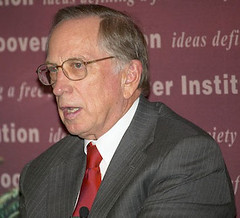
Boxer tries to block Nunn

Sen. Barbara Boxer (D-CA) tried to derail the attempt by Sen. Sam Nunn (D-GA) to bar by law gays and lesbians from the military. She introduced Amendment 783 to S. 1298, the 1994 National Defense Authorization Act. Her amendment would have struck Nunn's language and inserted in its place language that would permit the President to continue determining the matter as policy:

SEC. 546. SENSE OF CONGRESS CONCERNING HOMOSEXUALITY IN THE ARMED FORCES.

It is the sense of Congress that the policy of the Government concerning the service of homosexuals in the Armed Forces is a matter that should be determined by the President, as chief executive officer of the Government and commander-in-chief of the Armed Forces, based upon advice provided to the President by the Secretary of Defense and the military advisors to the President and Secretary.


The Boxer Amendment failed, 33-63, on 09 Sep 1993. Of 55 Democrats voting, 30 (55%) voted yes and 25 (45%) voted no. Of 41 Republicans voting, 3 (7%) voted yes and 38 (93%) voted no.

Sam Nunn makes the case for barring gays from the military

Then-Senator Sam Nunn (D-GA), speaking on the floor of the United States Senate on 16 Jul 1993, makes his case for barring gays and lesbians from the military. From the Congressional Record:

Mr. President, I believe it is essential that the Congress codify the policies regarding homosexuality in the Armed Forces by adopting legislative findings and by providing clear legislative direction to the executive branch and to the leadership and the men and women in the Armed Forces.

Based upon the hearings held in our committee, it is my view that any policy issued by the executive branch as well as any legislation enacted by the Congress must at a minimum be consistent with the following principles....

The first principle I would articulate today is that military service is a unique calling which has no counterpart in civilian society. The primary purpose of our Armed Forces is to prepare for and to prevail in combat should the need arise. The conduct of military operations requires members of the Armed Forces to make extraordinary sacrifices including, if need be, the ultimate sacrifice to provide for the defense of our Nation.

No. 2, the foundation of combat capability is unit cohesion. Unlike our civilian society, in the military the mission is the No. 1 priority. The unit is the second priority, and the individual is the third priority.

Mr. President, in society the individual comes first. In the military, the mission comes first. If in a quest for full societal constitutional rights in the military, which have never existed in the military, if in that quest we end up placing consideration of the individual before consideration of the mission, we are going to have an awful lot of people killed in combat, and we are going to have an awful lot of people wounded in combat. And we are going to have questionable military performance by many of our units if we replace the standing principles for years and years that have been part of our military history--that the mission comes first, not the individual.

That is what so many people do not understand about the military. But it is a cardinal principle, and it is a distinction between the military and our civilian society.

Mr. President, the third principle is that military personnel policies must facilitate the assignment and the worldwide deployment of service members who frequently must live and must work under close conditions affording minimal privacy. There is an awful lot that can be said on this subject. But another fundamental distinction between the military and civilian society is that people in civilian society, by and large, go home at night and they have the privacy of their homes. In many tens of thousands of military assignments, the home is the ship or the home is the tent or the home is the barracks. That is a fundamental distinction.

The fourth principle is that because of the factors that I have already enumerated, the presence in military units of persons who, by their acts or by their statements demonstrate a propensity to engage in homosexual acts, would cause an unacceptable risk to the high standards of morale, good order, and discipline, and unit cohesion that are absolutely essential to effective combat capability. There should be no change in the current grounds for discharge--homosexual acts, statements, or marriages.

The fifth principle is that while DOD policies on investigations may be subject to commonsense limitations because of the need to allocate scarce resources and to establish investigative priorities, these policies should not preclude investigations based upon any information relevant to an administrative or disciplinary proceeding.


Sam Nunn marches lockstep with Colin Powell

Then-Senator Sam Nunn (D-GA), speaking on the floor of the United States Senate on 27 Jan 1993, had this to say about gays serving openly in the military. From the Congressional Record:

"Gen. Colin Powell, Chairman of the Joint Chiefs, has stated that, in view of the unique conditions of military service, active and open homosexuality by members of the Armed Forces would have a very negative effect on military morale and discipline.

"Mr. President, I agree with General Powell's assessment."


Nunn cast deciding vote against ENDA in 1996

Former U.S. Senator Sam Nunn (D-GA) is being considered by the Obama campaign as the Democratic vice presidential running mate. Nunn was one of only five Democratic senators who voted against the Employment Non-Discrimination Act on 10 Sep 1996. The Act would have prohibited employment discrimination on the basis of sexual orientation under the Civil Rights Act of 1964. The bill failed by one vote, 49-50.

U.S. Senate Roll Call Votes 104th Congress - 2nd Session

as compiled through Senate LIS by the Senate Bill Clerk under the direction of the Secretary of the Senate

Vote Summary

Question: On Passage of the Bill (s.2056 )
Vote Number: 281
Vote Date: September 10, 1996, 03:41 PM
Required For Majority: 1/2 Vote Result: Bill Defeated
Measure Number: S. 2056
Measure Title: A bill to prohibit employment discrimination on the basis of sexual orientation.
Vote Counts: YEAs 49
NAYs 50
Not Voting 1

Alphabetical by Senator Name

Abraham (R-MI), Nay
Akaka (D-HI), Yea
Ashcroft (R-MO), Nay
Baucus (D-MT), Yea
Bennett (R-UT), Nay
Biden (D-DE), Yea
Bingaman (D-NM), Yea
Bond (R-MO), Nay
Boxer (D-CA), Yea
Bradley (D-NJ), Yea
Breaux (D-LA), Yea
Brown (R-CO), Nay
Bryan (D-NV), Yea
Bumpers (D-AR), Yea
Burns (R-MT), Nay
Byrd (D-WV), Nay
Campbell (R-CO), Nay
Chafee (R-RI), Yea
Coats (R-IN), Nay
Cochran (R-MS), Nay
Cohen (R-ME), Yea
Conrad (D-ND), Yea
Coverdell (R-GA), Nay
Craig (R-ID), Nay
D'Amato (R-NY), Yea
Daschle (D-SD), Yea
DeWine (R-OH), Nay
Dodd (D-CT), Yea
Domenici (R-NM), Nay
Dorgan (D-ND), Yea
Exon (D-NE), Nay
Faircloth (R-NC), Nay
Feingold (D-WI), Yea
Feinstein (D-CA), Yea
Ford (D-KY), Nay
Frahm (R-KS), Nay
Frist (R-TN), Nay
Glenn (D-OH), Yea
Gorton (R-WA), Nay
Graham (D-FL), Yea
Gramm (R-TX), Nay
Grams (R-MN), Nay
Grassley (R-IA), Nay
Gregg (R-NH), Nay
Harkin (D-IA), Yea
Hatch (R-UT), Nay
Hatfield (R-OR), Yea
Heflin (D-AL), Nay
Helms (R-NC), Nay
Hollings (D-SC), Yea
Hutchison (R-TX), Nay
Inhofe (R-OK), Nay
Inouye (D-HI), Yea
Jeffords (R-VT), Yea
Johnston (D-LA), Yea
Kassebaum (R-KS), Nay
Kempthorne (R-ID), Nay
Kennedy (D-MA), Yea
Kerrey (D-NE), Yea
Kerry (D-MA), Yea
Kohl (D-WI), Yea
Kyl (R-AZ), Nay
Lautenberg (D-NJ), Yea
Leahy (D-VT), Yea
Levin (D-MI), Yea
Lieberman (D-CT), Yea
Lott (R-MS), Nay
Lugar (R-IN), Nay
Mack (R-FL), Nay
McCain (R-AZ), Nay
McConnell (R-KY), Nay
Mikulski (D-MD), Yea
Moseley-Braun (D-IL), Yea
Moynihan (D-NY), Yea
Murkowski (R-AK), Nay
Murray (D-WA), Yea
Nickles (R-OK), Nay
Nunn (D-GA), Nay
Pell (D-RI), Yea
Pressler (R-SD), Nay
Pryor (D-AR), Not Voting
Reid (D-NV), Yea
Robb (D-VA), Yea
Rockefeller (D-WV), Yea
Roth (R-DE), Nay
Santorum (R-PA), Nay
Sarbanes (D-MD), Yea
Shelby (R-AL), Nay
Simon (D-IL), Yea
Simpson (R-WY), Yea
Smith (R-NH), Nay
Snowe (R-ME), Yea
Specter (R-PA), Yea
Stevens (R-AK), Nay
Thomas (R-WY), Nay
Thompson (R-TN), Nay
Thurmond (R-SC), Nay
Warner (R-VA), Nay
Wellstone (D-MN), Yea
Wyden (D-OR), Yea

Grouped By Vote Position

YEAs ---49


Akaka (D-HI)
Baucus (D-MT)
Biden (D-DE)
Bingaman (D-NM)
Boxer (D-CA)
Bradley (D-NJ)
Breaux (D-LA)
Bryan (D-NV)
Bumpers (D-AR)
Chafee (R-RI)
Cohen (R-ME)
Conrad (D-ND)
D'Amato (R-NY)
Daschle (D-SD)
Dodd (D-CT)
Dorgan (D-ND)
Feingold (D-WI)
Feinstein (D-CA)
Glenn (D-OH)
Graham (D-FL)
Harkin (D-IA)
Hatfield (R-OR)
Hollings (D-SC)
Inouye (D-HI)
Jeffords (R-VT)
Johnston (D-LA)
Kennedy (D-MA)
Kerrey (D-NE)
Kerry (D-MA)
Kohl (D-WI)
Lautenberg (D-NJ)
Leahy (D-VT)
Levin (D-MI)
Lieberman (D-CT)
Mikulski (D-MD)
Moseley-Braun (D-IL)
Moynihan (D-NY)
Murray (D-WA)
Pell (D-RI)
Reid (D-NV)
Robb (D-VA)
Rockefeller (D-WV)
Sarbanes (D-MD)
Simon (D-IL)
Simpson (R-WY)
Snowe (R-ME)
Specter (R-PA)
Wellstone (D-MN)
Wyden (D-OR)


NAYs ---50


Abraham (R-MI)
Ashcroft (R-MO)
Bennett (R-UT)
Bond (R-MO)
Brown (R-CO)
Burns (R-MT)
Byrd (D-WV)
Campbell (R-CO)
Coats (R-IN)
Cochran (R-MS)
Coverdell (R-GA)
Craig (R-ID)
DeWine (R-OH)
Domenici (R-NM)
Exon (D-NE)
Faircloth (R-NC)
Ford (D-KY)
Frahm (R-KS)
Frist (R-TN)
Gorton (R-WA)
Gramm (R-TX)
Grams (R-MN)
Grassley (R-IA)
Gregg (R-NH)
Hatch (R-UT)
Heflin (D-AL)
Helms (R-NC)
Hutchison (R-TX)
Inhofe (R-OK)
Kassebaum (R-KS)
Kempthorne (R-ID)
Kyl (R-AZ)
Lott (R-MS)
Lugar (R-IN)
Mack (R-FL)
McCain (R-AZ)
McConnell (R-KY)
Murkowski (R-AK)
Nickles (R-OK)
Nunn (D-GA)
Pressler (R-SD)
Roth (R-DE)
Santorum (R-PA)
Shelby (R-AL)
Smith (R-NH)
Stevens (R-AK)
Thomas (R-WY)
Thompson (R-TN)
Thurmond (R-SC)
Warner (R-VA)

Not Voting - 1

Pryor (D-AR)

Grouped by Home State

Alabama:
Heflin (D-AL), Nay
Shelby (R-AL), Nay

Alaska:
Murkowski (R-AK), Nay
Stevens (R-AK), Nay

Arizona:
Kyl (R-AZ), Nay
McCain (R-AZ), Nay

Arkansas:
Bumpers (D-AR), Yea
Pryor (D-AR), Not Voting

California:
Boxer (D-CA), Yea
Feinstein (D-CA), Yea

Colorado:
Brown (R-CO), Nay
Campbell (R-CO), Nay

Connecticut:
Dodd (D-CT), Yea
Lieberman (D-CT), Yea

Delaware:
Biden (D-DE), Yea
Roth (R-DE), Nay

Florida:
Graham (D-FL), Yea
Mack (R-FL), Nay

Georgia:
Coverdell (R-GA), Nay
Nunn (D-GA), Nay

Hawaii:
Akaka (D-HI), Yea
Inouye (D-HI), Yea

Idaho:
Craig (R-ID), Nay
Kempthorne (R-ID), Nay

Illinois:
Moseley-Braun (D-IL), Yea
Simon (D-IL), Yea

Indiana:
Coats (R-IN), Nay
Lugar (R-IN), Nay

Iowa:
Grassley (R-IA), Nay
Harkin (D-IA), Yea

Kansas:
Frahm (R-KS), Nay
Kassebaum (R-KS), Nay

Kentucky:
Ford (D-KY), Nay
McConnell (R-KY), Nay

Louisiana:
Breaux (D-LA), Yea
Johnston (D-LA), Yea

Maine:
Cohen (R-ME), Yea
Snowe (R-ME), Yea

Maryland:
Mikulski (D-MD), Yea
Sarbanes (D-MD), Yea

Massachusetts:
Kennedy (D-MA), Yea
Kerry (D-MA), Yea

Michigan:
Abraham (R-MI), Nay
Levin (D-MI), Yea

Minnesota:
Grams (R-MN), Nay
Wellstone (D-MN), Yea

Mississippi:
Cochran (R-MS), Nay
Lott (R-MS), Nay

Missouri:
Ashcroft (R-MO), Nay
Bond (R-MO), Nay

Montana:
Baucus (D-MT), Yea
Burns (R-MT), Nay

Nebraska:
Exon (D-NE), Nay
Kerrey (D-NE), Yea

Nevada:
Bryan (D-NV), Yea
Reid (D-NV), Yea

New Hampshire:
Gregg (R-NH), Nay
Smith (R-NH), Nay

New Jersey:
Bradley (D-NJ), Yea
Lautenberg (D-NJ), Yea

New Mexico:
Bingaman (D-NM), Yea
Domenici (R-NM), Nay

New York:
D'Amato (R-NY), Yea
Moynihan (D-NY), Yea

North Carolina:
Faircloth (R-NC), Nay
Helms (R-NC), Nay

North Dakota:
Conrad (D-ND), Yea
Dorgan (D-ND), Yea

Ohio:
DeWine (R-OH), Nay
Glenn (D-OH), Yea

Oklahoma:
Inhofe (R-OK), Nay
Nickles (R-OK), Nay

Oregon:
Hatfield (R-OR), Yea
Wyden (D-OR), Yea

Pennsylvania:
Santorum (R-PA), Nay
Specter (R-PA), Yea

Rhode Island:
Chafee (R-RI), Yea
Pell (D-RI), Yea

South Carolina:
Hollings (D-SC), Yea
Thurmond (R-SC), Nay

South Dakota:
Daschle (D-SD), Yea
Pressler (R-SD), Nay

Tennessee:
Frist (R-TN), Nay
Thompson (R-TN), Nay

Texas:
Gramm (R-TX), Nay
Hutchison (R-TX), Nay

Utah:
Bennett (R-UT), Nay
Hatch (R-UT), Nay

Vermont:
Jeffords (R-VT), Yea
Leahy (D-VT), Yea

Virginia:
Robb (D-VA), Yea
Warner (R-VA), Nay

Washington:
Gorton (R-WA), Nay
Murray (D-WA), Yea

West Virginia:
Byrd (D-WV), Nay
Rockefeller (D-WV), Yea

Wisconsin:
Feingold (D-WI), Yea
Kohl (D-WI), Yea

Wyoming:
Simpson (R-WY), Yea
Thomas (R-WY), Nay


Wednesday, June 11, 2008

For Sam Nunn

Sam Nunn is the conservative Democratic former U.S. Senator from Georgia who helped torpedo Bill Clinton's attempt to rescind the ban on gays serving openly in the military in 1993. As noted last week, Nunn is realigning his view on Don't Ask Don't Tell in an apparent effort to position himself as the next Secretary of Defense.

The ladies of En Vogue have something to say about that:


My Lovin' (You're Never Gonna Get It)

No, you're never gonna get it (Ow!)
Never ever gonna get it (No, not this time)
No, you're never gonna get it (My love)
Never ever gonna get it
(repeat)

I remember how it used to be
You never was this nice, you can't fool me
Now you talkin' like you made a change
The more you talk, the more things sound the same
What makes you think you can just walk back into her life
Without a good fight? Oh...
I just sit back and watch you make a fool of yourself
Cuz you're just wasting your time, oh...

CHORUS
No, you're never gonna get it (Not this time)
Never ever gonna get it (My lovin')
No, you're never gonna get it (Had your chance to make a change)
Never ever gonna get it
(repeat)

Now you promise me the moon and stars
Save your breath, you won't get very far
Gave you many chances to make change
The only thing you changed was love to hate
It doesn't matter what you do or what you say
She doesn't love you, no way
Maybe next time you'll give your woman a little respect
So you won't be hearing her say, "No way"

CHORUS

Doesn't matter what you do or what you say
She don't love you, no way
Maybe next time you'll give your woman a little respect
So you won't be hearing her say, "No way"

[And now it's time for a breakdown...]

Never gonna get it, never gonna get it
Never gonna get it (whoa-whoa-whoa-whoa)
Never gonna get it, never gonna get it
Never gonna get it, never get it

No, you're never gonna get it (Sweet lovin')
Never ever gonna get it (Sweet lovin')
No, you're never gonna get it (My lovin')
Never ever gonna get it (My lovin')
No, you're never gonna get it (Sweet lovin')
Never ever gonna get it (My lovin')
No, you're never gonna get it (Sweet lovin')
Never ever gonna get it (My lovin')

Tuesday, June 3, 2008

Sam Nunn says DADT due for review


Former U.S. Senator Sam Nunn (D-GA) was the principal congressional Democrat who helped Republicans ambush Bill Clinton over gays in the military in 1993. Now he's saying that Don't Ask Don't Tell is due for a review. He isn't calling for its outright repeal -- he's just saying that "it’s appropriate to take another look at it". That's code for "I want to be Secretary of Defense in a Barack Obama administration, but I would also be willing to be Secretary of Defense in a John McCain administration".

Some may recall his submarine photo-op tours wherein emphasis was placed on how closely sailors bunk near each other. Really closely. Imagine if one of them was, like, gay. Nope, can't allow those gays to be in any military of ours. Ban them, even if they're PhD-level linguists who could have translated Arabic terrorist messages.

 
eXTReMe Tracker